Edith Mbella
Biography and timeline.
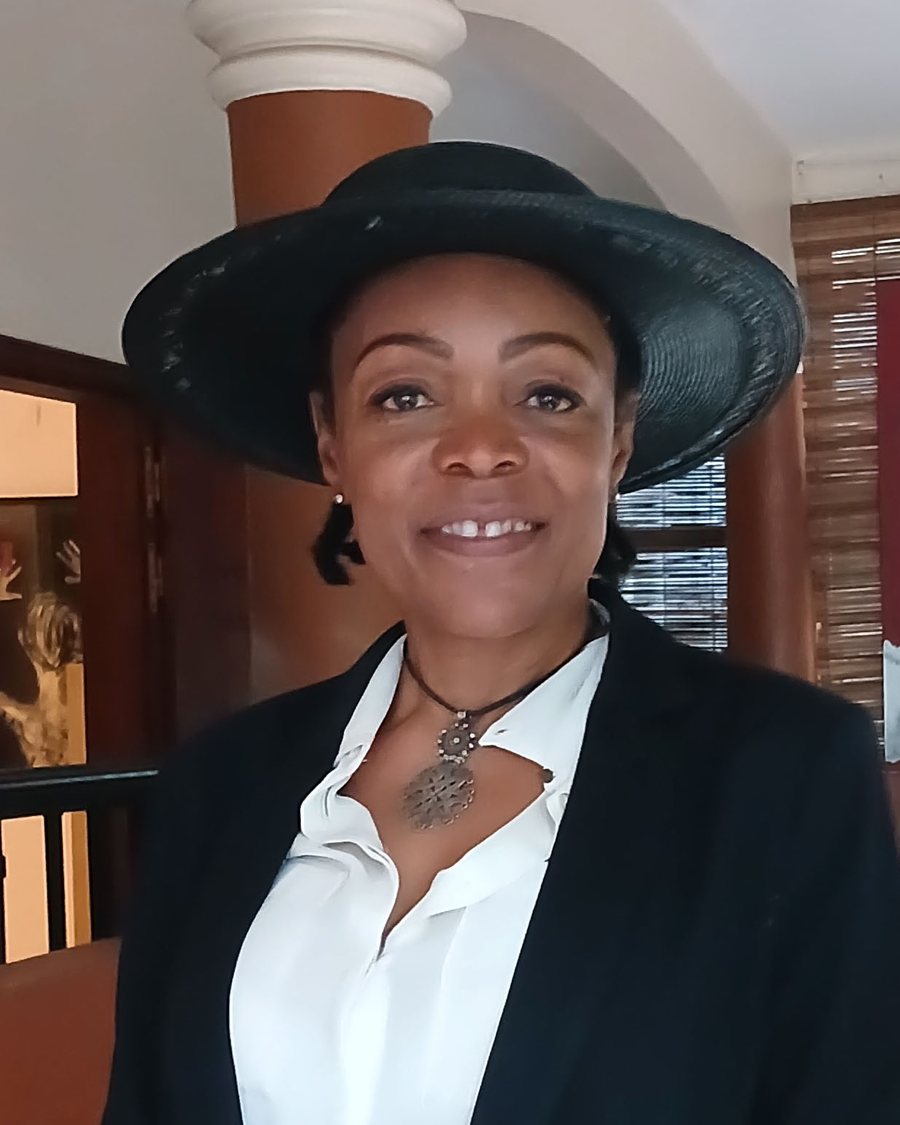
Edith Ursule Mbella is an expert in Central African ritual art, a collector, an art dealer and an exhibition curator. Cameroonian and Spanish, she lives between Douala and Spain, after more than two decades spent between Paris, Barcelona and Madrid.
A passion born in Paris
As a teenager, Edith Mbella discovered the galleries of Paris’s Left Bank and the Marché aux Puces. The way she looked at Central African objects there would never leave her. At eighteen she acquired a Bangwa maternity figure, the first piece of her personal collection — a statue from Cameroon that already says much about what her career would be: a taste for sculpture, attention to function, a link with the country of origin.
Training through apprenticeship
In a field where academic schools are rare, learning happens through contact with objects and with those who know them. In Paris she was introduced to ritual art by the dealer René Garcia. She then refined her knowledge with advice from Marc Léo Felix of the Basin Art History Research Center in Brussels.
This lineage matters: it places her practice in a tradition of eye and comparison, which the practice now formalises in a written method.
Three places, three stages
Oba African Art Gallery · Barcelona
She founded and ran the gallery with Didac Caparros. Thematic exhibitions and lectures for national and international bodies, including Casa África.
Edith Mbella Gallery · Madrid
She ran her own gallery: tribal art, design and contemporary African art.
Espace Bolo · Douala
Settled in Douala, she created a laboratory supporting young artists and an e-commerce project for made-in-Africa art and design.
Expertise recognised by peers
Several international galleries and collections have objects’ authenticity attested by her. The Hamill Gallery, for example, cites her as an external expert. This recognition rests less on titles than on continuous practice of the field, the market and transmission.
What drives her
Democratising art, shedding its elitist image, valuing authenticity and transmission.Edith Mbella · from an interview
These words sum up a line of conduct: opening access to art without lowering its standards. At Espace Bolo she supports emerging artists; at the practice she explains her opinions rather than imposing them.
Current commitments
- Leading the expertise practice and conducting appraisals.
- Programming Espace Bolo in Douala: exhibitions, support for artists, made-in-Africa art and design e-commerce.
- Talks, lectures and masterclasses university lectures, collector meetings and observation workshops.
To place this career in time, see the timeline from Paris to Douala. For professional relationships, see network and partners.
Public sources: Wikipedia entry “Edith Mbella”, Wikidata Q122149401, Casa África, Culturebene, Saimondy Arts et Culture, Hamill Gallery.
Frequently asked questions
Going further
Does Edith Mbella hold a university degree?
Her training was by apprenticeship, with the dealer René Garcia in Paris and then with advice from Marc Léo Felix in Brussels. She continues her training with specialists in African art history.
Where can I find public sources on her career?
A Wikipedia entry and a Wikidata item exist, along with press articles and institutional pages cited on the Press page.
Is Edith Mbella also a collector?
Yes. Her personal collection began at eighteen with the acquisition of a Bangwa maternity figure.
Next step
Meet Edith Mbella.
Describe your piece in a few lines and attach photographs: the reply is confidential.