Textiles, adornment, regalia
Cloth, regalia, jewellery.
Cloth, adornment, insignia and ceremonial objects express rank, belonging, occasion. Fragile and easily imitated, they require careful examination of material and workmanship.
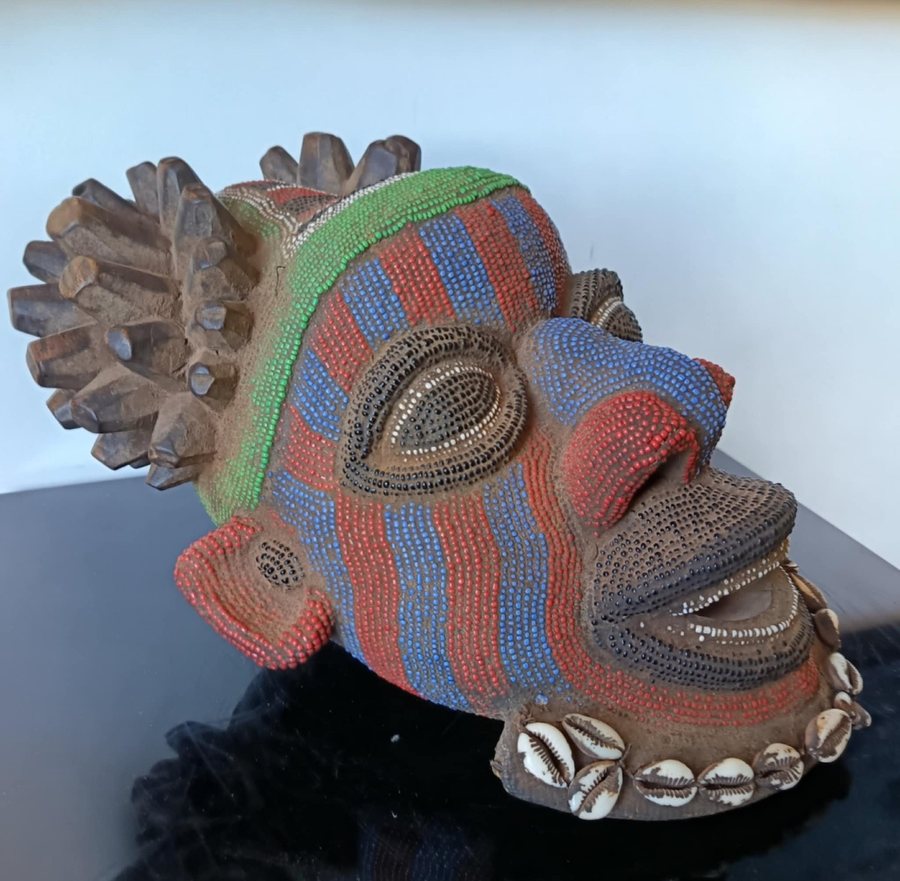
Textiles
Central Africa developed great textile traditions. One may cite the raffia cloths of the Kuba region (DRC), or the indigo resist-dyed fabrics of the kingdoms of western Cameroon. The appraisal examines fibres, weaving, dyes, motifs and uses, which were often linked to ceremonies or statuses.
Adornment and ceremonial objects
- Jewellery, necklaces, beads, bracelets.
- Headdresses, hats and ceremonial garments.
- Insignia of power and court accessories. Ceremonial cloths, beads, bracelets, headdresses and chiefly garments are the most common types.
Where the difficulty lies
Textiles are mended, recomposed, aged. Adornments are taken apart and put back together. The question is not just “authentic or not”, but “from which period, in what condition, with which interventions?”
See also: Cameroon and the Grassfields and preventive conservation.
Frequently asked questions
Going further
Can an old textile be dated?
Technique, fibres and dyes give clues; scientific dating may be considered in some cases. Laboratories are chosen case by case according to the material to be dated.
How should a textile be conserved?
Away from light, damp and insects, flat or rolled on a neutral support. See preventive conservation.
Next step
A textile or adornment to have examined?
Describe your piece in a few lines and attach photographs: the reply is confidential.